
DIY Roof Coating vs Professional | AMES Maximum Stretch Compared to Conklin Puma XL
What property owners need to know about elastomeric coatings before buying buckets at Home Depot or hiring a contractor. Real lab data, application thickness reality, and why substrate prep matters more than elongation percentages.
🔲 Elongation without tensile strength is just a rubber band waiting to snap.
🔲 DIY roof coatings don’t fail because of effort, they fail because chemistry, prep, and thickness aren’t optional.
🔲 You’re not saving money if you spend $4,500 to delay a $20,000 problem.
🔲 Menards sells DIY coatings, but hires Conklin contractors for their own roofs.
The Guy I Met Yesterday
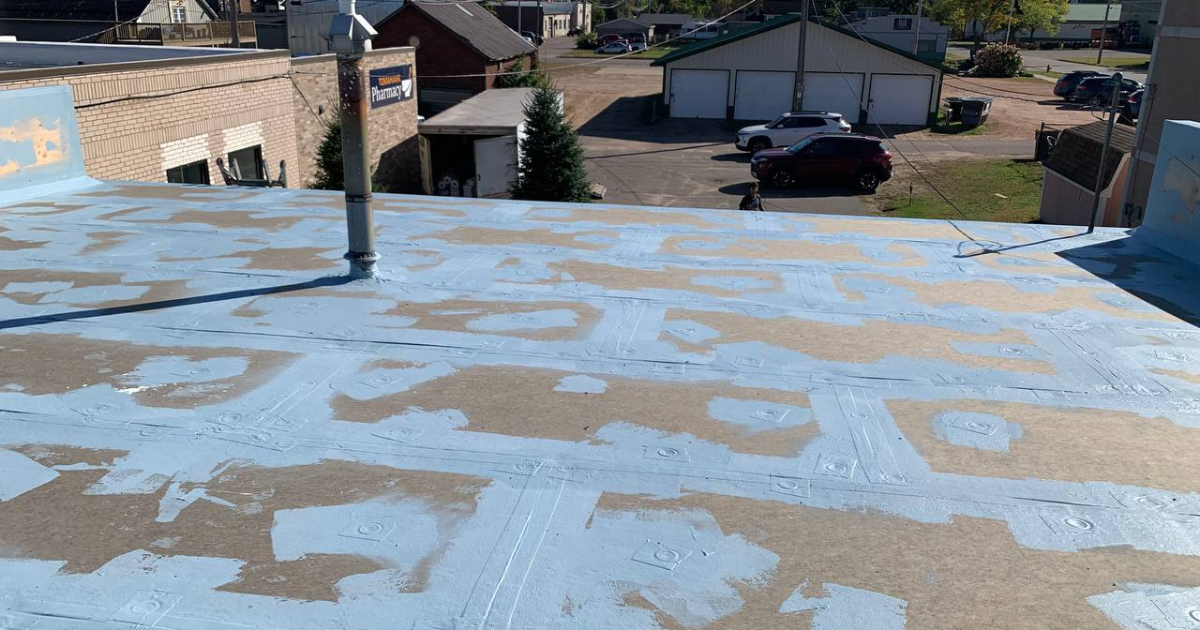
He was standing on his roof. DIY guy. Working hard. Trying to make it work. He'd bought some stretchy rubber buckets from a hardware store and was rolling it on himself.
I get it. Times are tough. If you can change your own oil, fix your own appliances, handle your own roof coating … that's labor cost shaved. Believing our country needs more of that kind of self sufficiency.
But here's what we talked about, "Are you really saving money, or are you just delaying the problem?"
Because coating a roof isn't like painting a wall. You're not covering something cosmetic. You're trying to or prevent water intrusion, structural damage, and mildew traps from forming.
If you get the chemistry wrong, the substrate prep wrong, or the application thickness wrong, you've just spent $2,000 to $3,000 to create a 5 to 10 year chemistry experiment that's going to fail anyway.
Let's compare what you're actually getting when you buy DIY buckets versus professional grade systems.
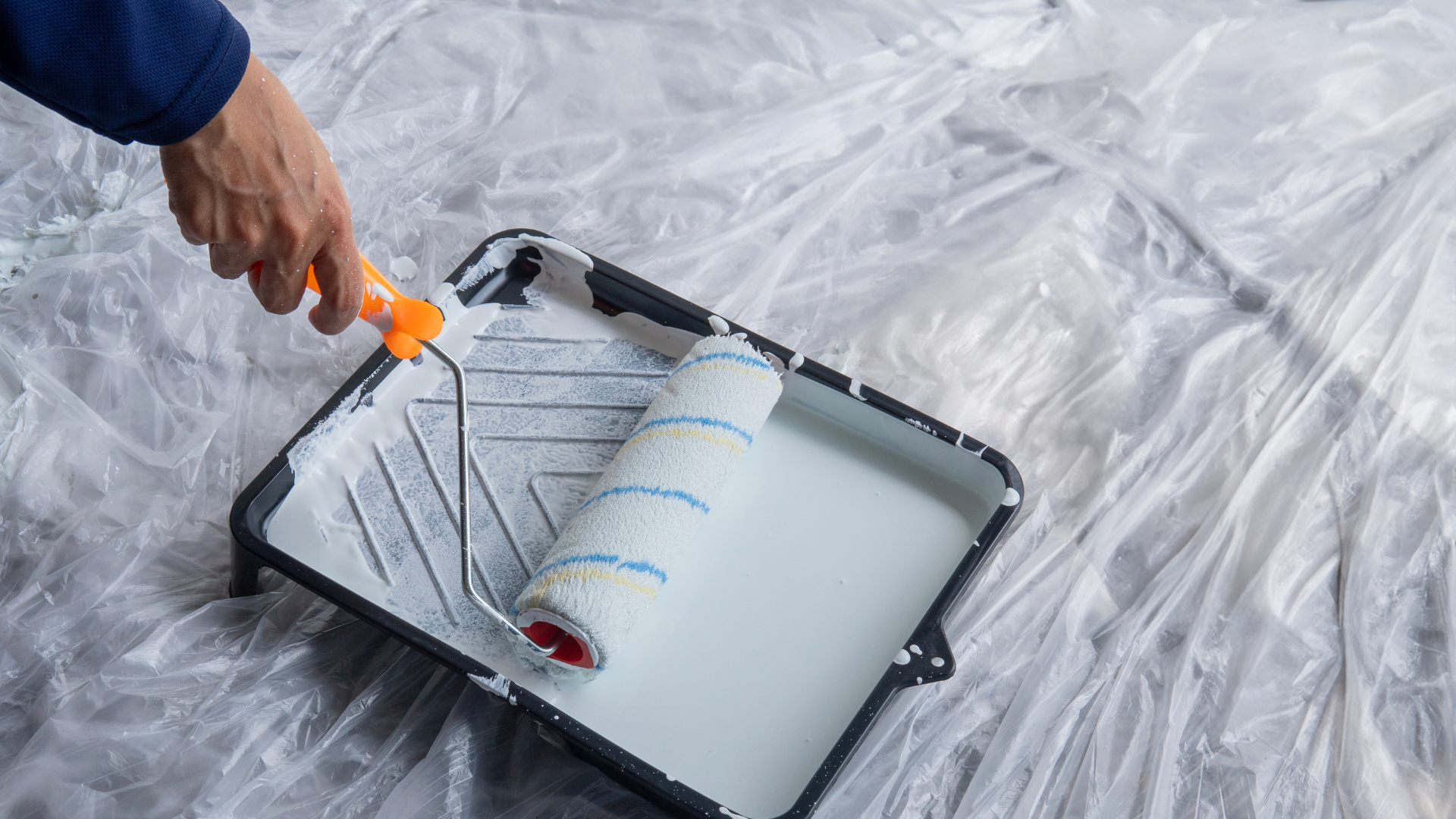
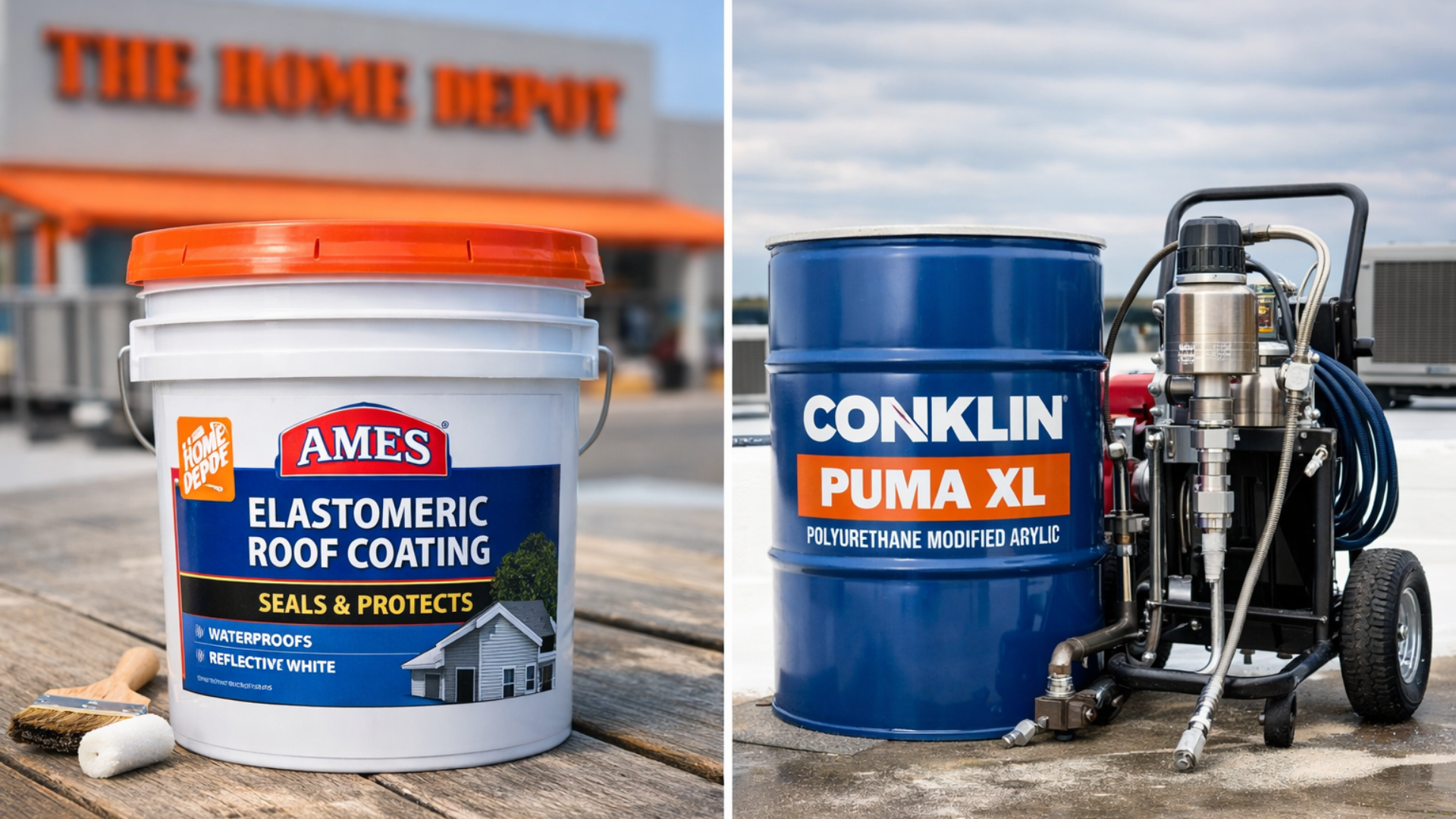
AMES Maximum Stretch vs Conklin Puma XL, The Lab Battle
AMES markets their Maximum Stretch product with impressive numbers. Let's look at what they claim and what that actually means in real world application.
AMES Maximum Stretch (DIY Bucket, Available at Home Depot, Ace, Amazon).
- Elongation: 650% (sounds amazing, right?)
- Application method: Roll on or brush
- Coverage rate: 1 gallon per 100 square feet (manufacturer claim)
- Thickness achieved: 10 to 15 mils (real world DIY application)
- Warranty: 1 to 2 years material defect coverage
- Price: $36 to $45 per gallon retail
Conklin Puma XL (Professional Grade Elastomeric)
- Elongation: 250% (lower number, but here's why that doesn't matter)
- Tensile strength: Significantly higher psi rating
- Application method: Professional spray equipment with in line heating
- Coverage rate: 1.9 gallons per 100 square feet (two coat system)
- Thickness achieved: 27 to 30 mils (manufacturer spec + human tendency to go thicker)
- Warranty: 18 to 20 year renewable with proper maintenance
- Price: Wholesale available (not retail bucket pricing)
Why Elongation Percentage Doesn't Tell the Whole Story
AMES loves to advertise 650% elongation. That sounds incredible. "It stretches 6.5 times its original size without tearing!" But are you buying a rubber band?
Elongation without tensile strength is like having a rubber band that stretches really far but snaps easily.
Here's what matters more than elongation,
- Tensile strength (how much force it can withstand before breaking)
- Mil thickness (how much actual material is on your roof)
- Adhesion (does it actually grip your substrate, or will it peel off in sheets?)
- UV resistance (will it break down after 3 to 5 years of sun exposure?)
- Proper substrate prep (are you coating over tar? metal? old TPO plastic? Do you know how to prep each one?)
- Is it acid, grease, and chemical resistant against acid rain from nearby factories?
Conklin's 250% elongation paired with higher tensile strength and 30 mils of thickness outperforms AMES 650% elongation at 12 mils every single time.
It's not about how far it stretches. It's about how well it protects your roof under real-world conditions: hail, wind, UV exposure, ponding water, thermal expansion, and contraction cycles.
The Real Cost Comparison: $500 Now vs $5,000 Later
Let's do the math on a 10,000 square foot commercial flat roof.
DIY Bucket Approach (AMES or similar products)
- Material cost: $3,600 to $4,500 (100 gallons at $36 to $45 each)
- Labor cost: Your time (2 to 3 weekends, 40 to 60 hours of physical work)
- Equipment: Rollers, brushes, tarps, cleaning supplies ($200 to $300)
- Total upfront: $4,000 to $5,000
But here's what you're NOT accounting for,
- No fabric mesh reinforcement (Class 4 hail rating requires embedded mesh)
- No proper primer for your specific substrate
- No professional grade degreaser or surface prep
- 10-15 mils thickness instead of 27 to 30 mils
- You're likely patching problem areas instead of doing full roof coverage
- Warranty that expires in 1 to 2 years with "properly applied" loopholes
Professional Conklin System
- Material cost: Higher grade product, higher coverage rate (1.9 gal/100 sq ft) and that’s over the top of gripping primer and Benchmark basecoat
- Labor cost: Professional installation with $70,000 spray equipment
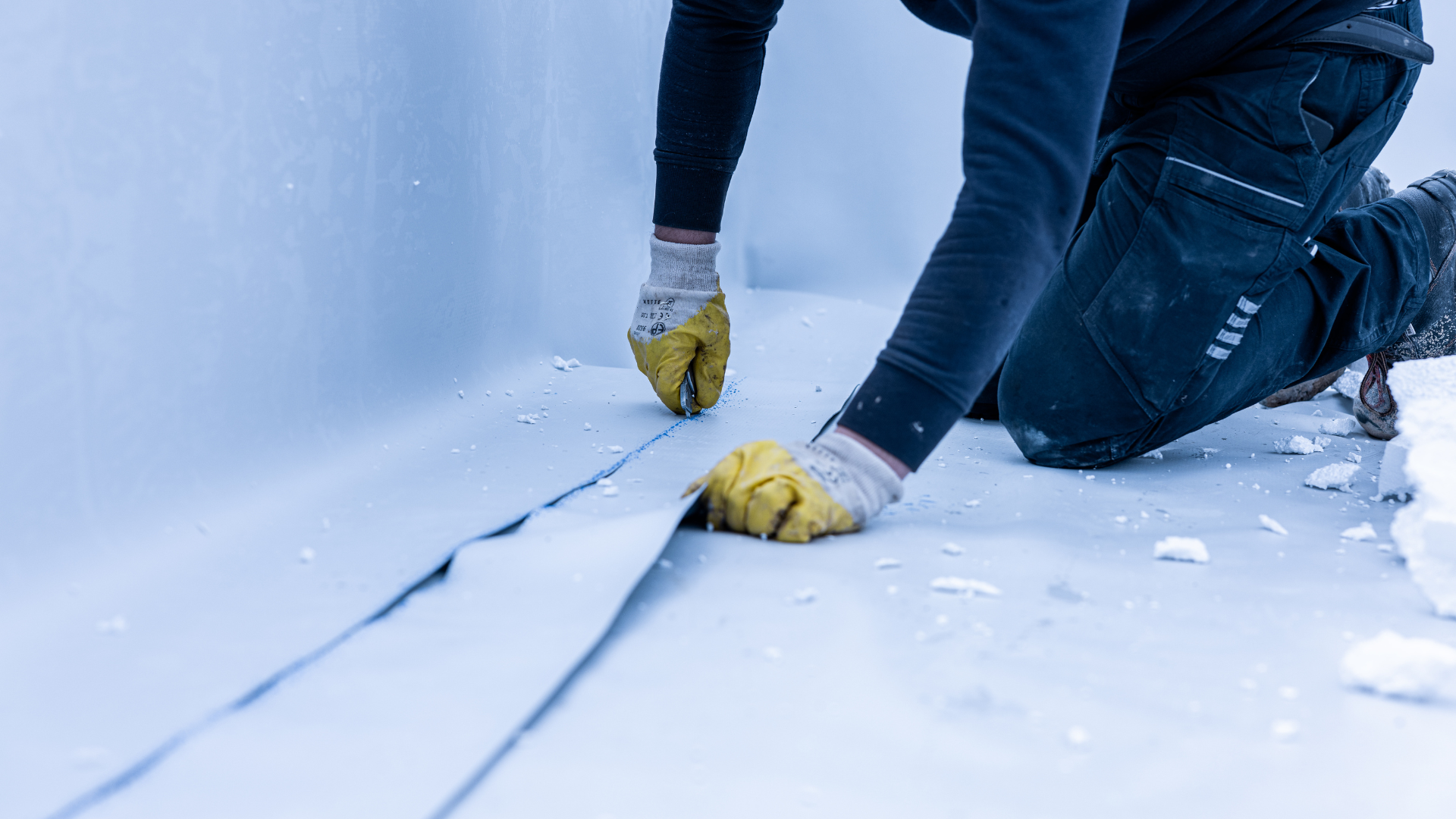
- Includes: Proper substrate prep, primer selection, fabric reinforcement, perimeter termination, metal flashing details, AC unit boots
- Warranty: 18 to 20 years renewable
- Total price: Higher upfront, but cost-per-year is significantly lower
Let's compare cost per year of protection
- DIY bucket: $4,500 ÷ 3 years (realistic lifespan) = $1,500/year
- Professional Conklin: Higher initial cost ÷ 20 years = Lower annual cost + transferable warranty
If your DIY coating fails after 5 years and you have to tear it off to start over, you've wasted $4,500 plus the cost of removal plus the cost of doing it right the second time.

What You're NOT Getting with DIY Buckets
Rolling on elastomeric coating from Home Depot buckets seems straightforward. YouTube University makes it look easy. But here's what those videos don't show you.
1. Substrate Compatibility Issues
Not all chemistry bonds together. Tar doesn't grip well to metal. Acrylic doesn't stick to silicone. Old rubber membranes need specific primers.
Are you coating over
- Modified bitumen (tar and gravel)?
- TPO plastic membrane?
- EPDM rubber?
- Metal panels?
- Existing failed coating?
- What sticks to silicone?
Each substrate requires different prep, different primer, different application technique. Get it wrong and you're creating a delamination timebomb.
2. Perimeter Termination
How are you sealing the edges where your roof meets the wall? Where the coating stops at the parapet? Where it wraps around metal flashing?
Professional systems use termination bars, caulking, and proper detailing. DIY guys usually just... stop rolling and hope for the best.
3. AC Unit Boots and High Concern Areas
AC units are notorious for leaking. Why? Because the insulation around the refrigerant lines creates condensation, and improper flashing allows water intrusion.
Professional installers know how to properly boot and wrap these high concern areas with fabric reinforcement and extra material thickness.
DIY guys roll some coating around the base and call it good. Then wonder why it's leaking six months later.
4. Structural Issues Underneath
Here's the big one, "What if your roof substrate is failing?"
If the decking is rotted, if insulation is soaked, if there's trapped moisture between layers - coating over the top doesn't solve anything. You're putting a Band Aid over cancer.
A professional evaluation (which costs a couple hundred dollars) can tell you whether coating makes sense or whether you're wasting money on a roof that needs replacement.
5. Insurance and Code Compliance
Some insurance policies require professional installation for warranty coverage. Some city codes require permits and inspections for commercial roof work.
DIY bucket coatings bypass all of that. Which might be fine... until you file a claim and find out your policy doesn't cover "improperly installed roof systems."

The Menards Story (And Why It Matters)
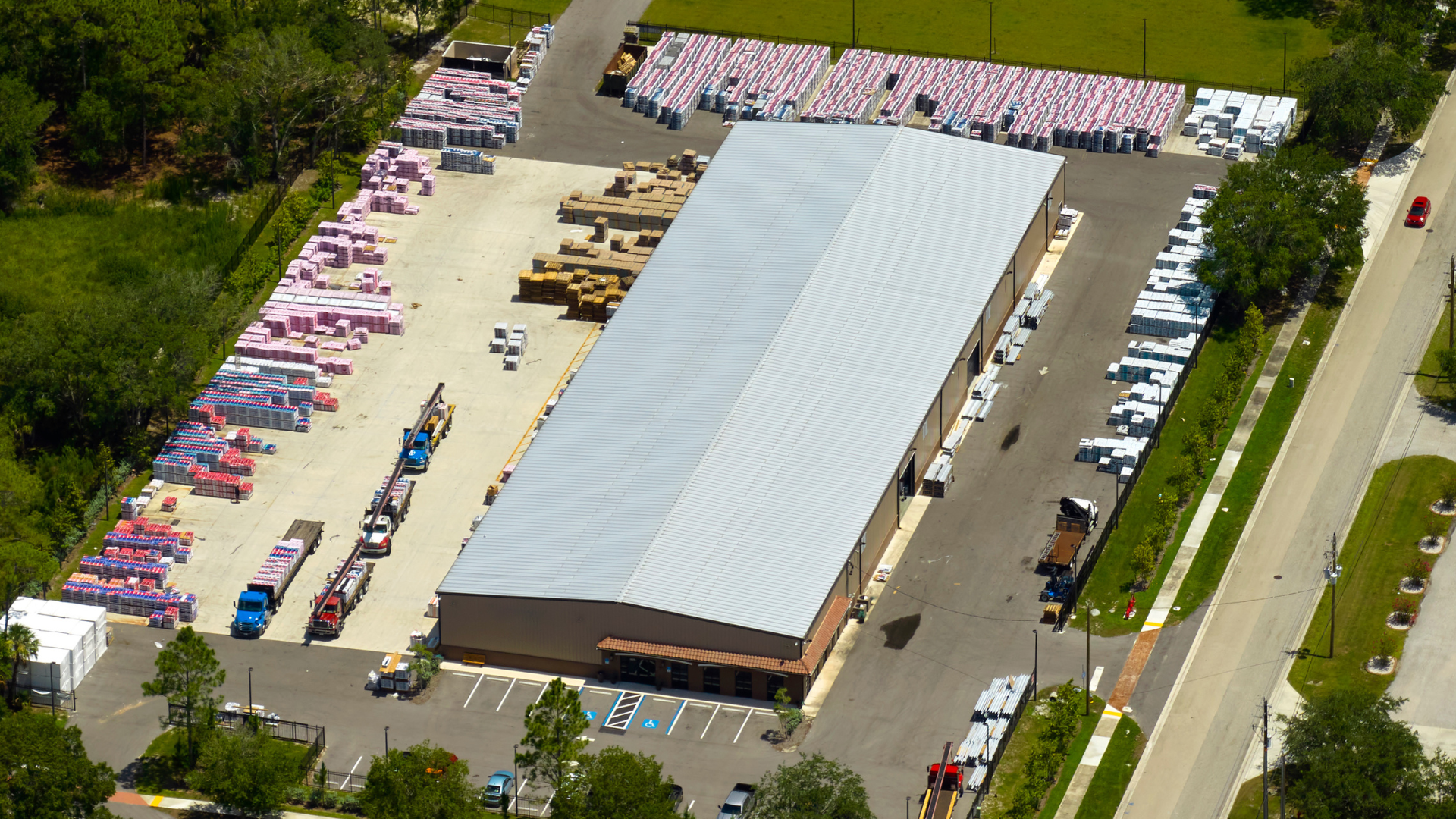
Menards sells several brands of DIY roof coating in their stores. Duck COAT, various elastomeric products, all marketed to property owners looking to shave big money.
But here's the funny part, When Menards needs to coat their own commercial roofs, they don't use any of the products they sell to customers.
Menards corporate hires Conklin certified contractors!
Why? Because when it's their building, their inventory, their liability, they want profesional grade systems installed by factory trained crews with proper equipment and transferable warranties.
That tells you everything you need to know about the difference between "good enough to sell" and "good enough to use."
Can You Buy Professional Grade Materials for DIY Application?
Yes. Conklin materials are available at wholesale for serious DIYers.
But "serious" means,
- You understand substrate prep and primer selection
- You're committed to coating the entire roof, not just patching problem areas
- You're willing to invest in proper surface cleaning (we have commercial grade degreasers)
- You understand that fabric reinforcement is necessary for Class 4 hail ratings
- You're doing this as a one time project with proper commitment, not a weekend experiment
We're not trying to gatekeep professional materials. We're trying to help you understand what you're getting into.
If you only have $500 and you're trying to stretch it as far as possible, we get it. But putting lipstick on a pig doesn't take away the stink.
Better options?
- Get a professional evaluation first ($0) to determine if coating makes sense. Core samples. Moisture mapping. See everything you can’t see on the surface.
- If yes, buy wholesale Conklin materials with proper technical support
- Follow manufacturer specs exactly (not YouTube approximations)
- Document your work with photos (this matters for future warranty or sale)
Or hire professionals and get 20-year renewable coverage with nationwide labor warranty.
What Happens Next?
You've now seen the real comparison between DIY bucket coatings and professional grade systems.
You know that,
- Elongation percentage doesn't matter without tensile strength and mil thickness
- Substrate prep and chemistry compatibility determine long term success
- DIY coatings rarely include proper perimeter termination, fabric reinforcement, or structural evaluation
- Professional spray equipment costs $70,000+ (not a weekend rental)
- Menards sells DIY products but hires Conklin contractors for their own roofs
- Wholesale professional materials are available for committed DIYers
This is Part 1 of a series. Future articles will cover,
- Substrate specific prep guides (metal vs tar vs TPO vs EPDM)
- Fabric reinforcement and Class 4 hail ratings
- Perimeter termination and metal flashing details
- When to replace vs restore (structural evaluation criteria)
- Urethane vs elastomeric vs silicone chemistry comparisons
We operate as a Gospel Business. Our proceeds support community outreach and worldwide missions work. We're not here to shame DIY approaches or maximize profit per roof.
We're here to give you transparent information so you can make intelligent decisions about your building.
If you're genuinely committed to DIY with professional grade materials, call us. If you want a professional evaluation before spending $3,000 on buckets that might not solve your problem, call us.
If you just want to keep learning, stay tuned. We're building the most comprehensive commercial roofing resource library in the industry, one article at a time.
The Bottom Line
AMES Maximum Stretch offers 650% elongation at 10 to 15 mils thickness with 1 to 2 year material warranty. Conklin Puma XL delivers 250% elongation at 27 to 30 mils thickness with 18 to 20 year renewable warranty.
But the real comparison isn't material specs. It's DIY application vs professional systems. Substrate prep, primer selection, fabric reinforcement, perimeter termination, structural evaluation, spray equipment, and long term cost-per-year protection.
You can save money upfront with DIY buckets. Or you can solve the problem correctly the first time with professional grade systems that last 20+ years.
The choice is yours. But now you know what you're actually comparing.
Related Resources
- Finding the Right Commercial Roofing Solution
- The Four Party Warranty Responsibility Matrix | Who Actually Pays When Your Roof Fails?
- Commercial Roof Warranties Explained | Protection Beyond the Installation
- The Complete Guide To Commercial Roofing Materials | Durability Meets Cost Effectiveness
- Before You Fix the Roof, Fix the Conversation
Deep Dive Into Specific Topics
- YourWarrantySaysWhat.com (Loophole analysis)
- SiliconeIsSilly.com (Why we don't do silicone)
- WeWashFlatRoofs.com (Maintenance matters)
- BigBeautifulRoofBill.com (Transparent pricing guide)
- ModernRoofChemistry.com (What's going on up there?)
- SchoolEnergyRebates.com (Energy grants for schools)
- RelationshipRoofing.com (What matters more?)
- MeetYourInstallers.com (Fabulous families)
- RoofServiceMenu.com (What are my options?)
- TenantRoofRights.com (Tenant questions)

We Love Conversations
 SoHelpful@PristineIndustrialRoofing.com