
Duck Coat vs Conklin Affinity | Why a $269 Bucket of Slop Won't Save Your Commercial Roof
What Menards won't tell you about liquid thermoplastic rubber coatings versus professional grade urethane systems. Real warranty language, substrate bonding chemistry, and why single coat applications fail in Northwest Indiana's extreme temperature cycles.

🔲 Duck Coat is a thermoplastic rubber coating (liquid plastic/rubber hybrid) with NO primer, NO basecoat, NO fabric reinforcement, just topcoat slapped over existing substrate
🔲 Conklin Affinity is a urethane system with Crimson primer + SpunFlex2 fabric mesh reinforcement + Battleship grey basecoat + Brilliant white topcoat = 30+ mils with Class 4 hail rating
🔲 Duck Coat warranty: "Liability is limited to replacement of the product or refund of purchase price" = zero coverage for consequential damage or loss
🔲 Conklin Affinity warranty: 20+ year factory warranty with proper maintenance, 25-30 years before recoat needed (requires certified professional installer)
🔲 Northwest Indiana roofs experience 160 to 180°F summers, below freezing winters, plus earth reverberation from Hammond's extreme train traffic … single coat systems can't handle the expansion/contraction cycles
The Guy at Menards with a Bucket in His Hand
I was standing in the roofing aisle at Menards yesterday. There's this guy Kenny, holding a 5-gallon bucket of Duck Coat. He's flipping it over, reading the fine print, squinting at the warranty language.
He owns a mechanic shop and a U-Haul rental place. Two buildings. Both leaking. He's stretched thin and he's thinking, "Maybe if I grab the most expensive bucket, the premium grade stuff, I can throw it up there this weekend and solve the problem."
I get it. We've all been there. You're looking at a $269 bucket versus calling a contractor who's gonna quote you $8,000 or $12,000 for a professional system. Or simply patch the true source of the mysterious leak.
But here's what that bucket isn't telling you: You're not buying a roof coating system. You're buying a chemistry experiment that's gonna fail in 3 to 5 years.
Let me show you why.

Duck Coat: What You're Actually Buying at Menards
Duck Coat (manufactured by ThorWorks Industries in Sandusky, Ohio) markets itself as "The Best Roof Coating Solution for the Toughest Conditions."
Big yellow bucket. Bold "20 Year Protection" badge. Duck mascot with a paint roller. Promises ponding water resistance, elastic properties, and easy application by spray, brush, or roll.
Sounds great. Until you read the actual label.
Here's what Duck Coat actually delivers,
Material: Thermoplastic rubber coating (liquid plastic/rubber hybrid)
Ingredients: Parachlorobenzotrifluoride, Dimethyl Carbonate, Aromatic Petroleum Distillates, Calcium Carbonate, Titanium Dioxide, Rubber Compounds, Silicon Dioxide
Application: Single topcoat (no primer, no basecoat, no fabric reinforcement)
Coverage: 70 square feet per gallon per coat, two coats recommended
Temperature range: Can apply as low as 35°F
Warranty: "Liability is limited to replacement of the product, or at its option, to a refund of the purchase price thereof. There are no other warranties either expressed or implied for any incidental or consequential damage or loss is specifically excluded at all times."
Translation: If your roof fails after you slap Duck Coat on it, ThorWorks will refund your $60 bucket. They won't cover the $15,000 in water damage to your inventory, the structural repairs, or the cost of tearing off the failed coating and doing it right.

Conklin Affinity: What Professional Grade Urethane Actually Means
Conklin Affinity is a urethane system. Not acrylic. Not thermoplastic rubber. Urethane.
Urethane chemistry bonds at the molecular level to rubber, plastic, tar, gravel, torch-down modified bitumen, BUR (built-up roofing), even raw cinderblock parapet walls.
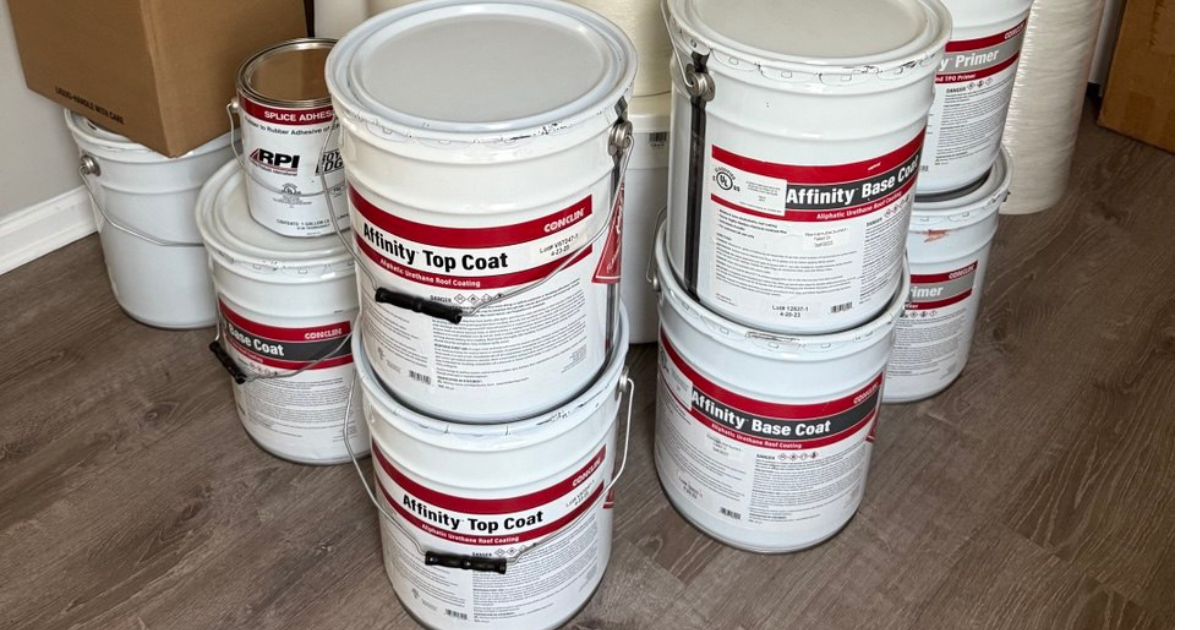
Here's the system you're actually getting with Affinity,
Layer 1: Crimson Primer
- Prepares substrate for bonding
- Degreases existing membrane
- Removes acid residue, old coatings, biological contamination
- Applied to bare substrate FIRST (not optional)
Layer 2: Fun Flex Fabric Reinforcement
- Embedded INTO the primer (not the basecoat or topcoat)
- Eliminates seams
- Provides Class 4 hail rating
- Keeps everything smooth and tight, even over pronounced substrate irregularities
Layer 3: Battleship Grey Basecoat
- First structural layer of urethane
- Grips to primed surface
- Builds mil thickness
Layer 4: Brilliant White Topcoat
- Reflective finish
- UV protection
- Final waterproofing layer
Total thickness: 30+ mils (especially with fabric reinforcement)
Warranty: 20+ year factory warranty with proper maintenance. Expected lifespan 25 to 30 years before recoat needed.
Certification requirement: Must be installed by Conklin Certified Contractor for factory warranty coverage.
The Chemistry Battle: Thermoplastic Rubber vs Urethane
Let's talk about what happens when you slap liquid plastic on top of existing roofing materials.
Duck Coat's Problem
Thermoplastic rubber is a hybrid material. It's part plastic, part rubber compounds. It's flexible (which sounds good), but it doesn't chemically bond to most substrates.
It sits ON TOP of your roof like a blanket. It's not gripping at the molecular level.
What happens after 3 to 5 years?
- Temperature cycles (160 to 180°F in summer, below freezing in winter) cause expansion and contraction
- The coating stretches and shrinks repeatedly
- It starts to separate from the substrate
- Bubbles form where moisture gets trapped underneath
- Edges peel up
- You're back to square one
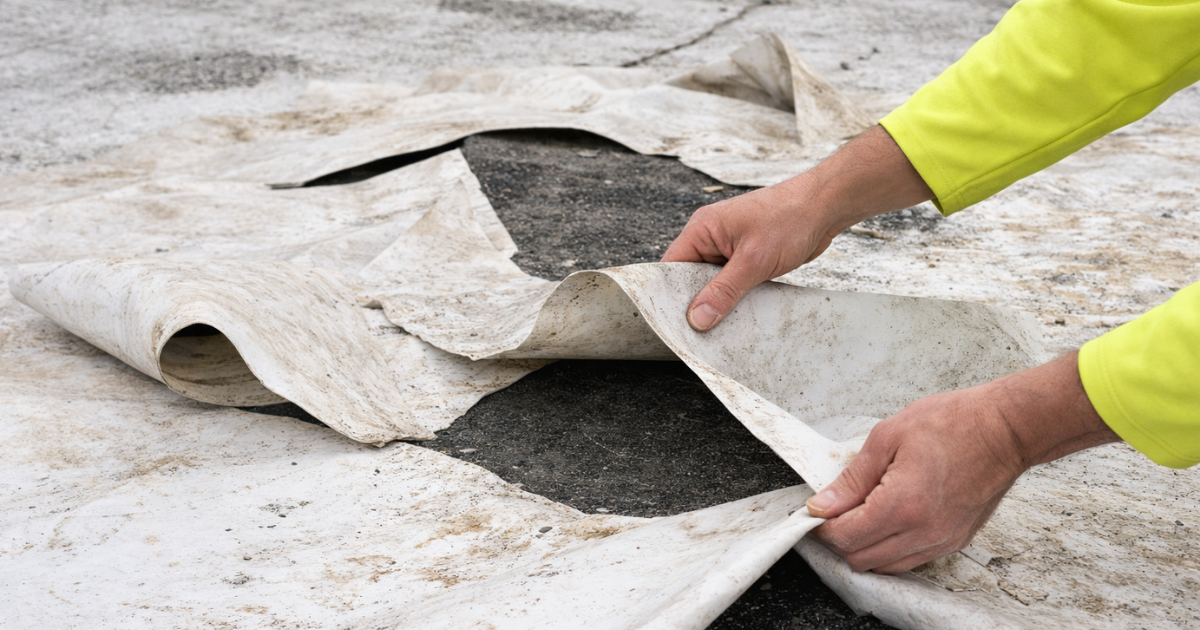
I've done roof inspections where I can literally grab the edge of a failed Duck Coat application and peel it off in sheets. It's not bonded. It's just laying there, waiting to fail.
Affinity's Advantage
Urethane chemistry forms covalent bonds with substrate molecules. It's not sitting on top. It's gripping into the existing membrane.
That's why Affinity works on
- EPDM rubber roofs
- TPO plastic membranes
- PVC single ply systems
- Modified bitumen (tar and gravel)
- Torch-down roofing
- BUR (built-up roofing)
- Metal panels
- Concrete decks
- Even raw cinderblock walls
The Crimson primer opens up the substrate at the molecular level. The urethane basecoat penetrates and bonds. The topcoat seals it.
You're not covering your roof. You're chemically attaching a new waterproofing system to the existing structure.
.png)
Northwest Indiana's Special Roof Killing Conditions
Here's what people don't understand about roofs in Northwest Indiana.
Temperature Extremes
- Summer: 160-180°F surface temperatures
- Winter: Below freezing for some weeks
- That's a 200°F temperature swing annually
Every degree of temperature change causes expansion and contraction. Your roof is literally moving under that coating.
Single layer thermoplastic systems can't handle that cycle. They stretch, they shrink, they separate.
Train Traffic (The Hidden Killer)
Hammond, Indiana is one of the highest traffic rail corridors in America. Thousands of trains per week rumble through Lake County and Porter County carrying freight to and from Chicago.
Every train creates earth reverberation. Your building moves. Subtly, but it moves.
That constant vibration loosens any coating that isn't chemically bonded to the substrate. Over 5 to 10 years, single coat applications work themselves loose.
Urethane's molecular bonding handles the movement. Thermoplastic rubber just rides on top until it doesn't.
.png)
The Real Cost Comparison (10,000 Square Foot Roof)
Let's do the math on a typical commercial warehouse in Hammond or Gary.
Duck Coat DIY Approach
- Coverage: 70 sq ft per gallon per coat, two coats recommended
- Total gallons needed: (10,000 ÷ 70) × 2 = 286 gallons
- Cost per gallon at Menards: ~$60
- Material cost: $17,160
- Labor cost: Your weekends for the next month
- Equipment: Rollers, brushes, cleaning supplies ($300-$500)
- Total: ~$18,000
But remember
- No primer (coating won't bond properly)
- No fabric reinforcement (no Class 4 hail rating)
- No warranty coverage for consequential damages
- Expected lifespan: 3-5 years before failure
Cost per year: $18,000 ÷ 4 years = $4,500/year
Conklin Affinity Professional System
- Material: Crimson primer + SpunFlex2 fabric mesh + Affinity basecoat + topcoat
- Labor: Professional installation with Graco spray equipment for proper thickness and heat for bonding
- Application: 30+ mils achieved (not 10-15 mils like DIY)
- Factory warranty: 20+ years
- Expected lifespan: 25-30 years before recoat
Cost per year: Significantly lower annual cost + transferable warranty when you sell the building
When Duck Coat fails after 4 years, you have to pay for
- Removal of failed coating ($1- to $4 per square foot)
- Substrate repairs from trapped moisture damage
- New coating system installed correctly
You've now spent $15,000 + removal costs + repair costs + new system costs.
Congratulations, you just paid triple to do it right the second time.
.png)
What the Duck Coat Warranty Actually Says (In Plain English)
Let's read the warranty language together.
"ThorWorks Industries warrants this product to be of merchantable quality, when used or applied in accordance with the instructions hereon. ThorWorks Industries does not warrant this product to be suitable for any particular use or purpose other than for which it is intended. Liability is limited to replacement of the product, or at its option, to a refund of the purchase price thereof. There are no other warranties either expressed or implied for any incidental or consequential damage or loss is specifically excluded at all times."
Translation,
- "Merchantable quality" = The bucket isn't defective when you buy it
- "When used or applied in accordance with instructions" = If you mess up application (which most DIYers do), warranty is void
- "Liability is limited to replacement of product or refund of purchase price" = They'll give you another bucket or $60 back
- "No warranties for incidental or consequential damage" = They're not covering your ruined inventory, structural damage, business interruption, or anything else
This is a product warranty, not a system warranty.
If your roof fails, they'll refund the cost of the bucket. That's it.
Conklin's warranty covers the SYSTEM. If the coating fails under warranty, a certified contractor repairs it at no cost to you. Labor included. Materials included. That's the difference between a $60 bucket and a professional system.
The Stories I've Seen (Real Roof Inspections)
Story #1: The Peeling Sheets
Property owner in Griffith, Indiana. Warehouse roof. He'd applied Duck Coat himself three years prior. Called me because it was leaking again.
I climbed up there and could literally grab the edge of the coating and peel it off in 2-foot-wide sheets. Like pulling up shelf liner. It hadn't bonded to the EPDM rubber underneath at all.
Why? No primer. Just slapped thermoplastic rubber on top of old rubber. Chemistry doesn't work that way.
Cost to fix: $12,000 to remove failed coating, prep substrate properly, install Affinity system.
He'd already spent $8,000 on the Duck Coat attempt. Total cost: $20,000 to solve a problem that should've cost $12,000 if done right the first time.

Story #2: The Bubbling Mess
Commercial building in Hammond. Owner had hired a "handyman" to coat the roof with hardware store buckets.
After one summer of 170°F temperatures and one winter of freeze-thaw cycles, the entire roof had bubbled up. Looked like bubble wrap.
Why? Moisture got trapped under the coating. As temperatures cycled, the trapped moisture expanded and contracted. The coating separated from the substrate.
Insurance denied the claim because the coating was "improperly installed."
Cost to fix? Complete tear off and replacement. $45,000.
Can You Buy Conklin Affinity at Wholesale?
Yes. We sell Conklin materials at wholesale to serious DIYers.
But "serious" means
- You understand substrate prep is 60% of the job
- You're willing to apply Crimson primer and let it cure properly
- You're embedding Fun Flex fabric into wet primer (not basecoat or topcoat)
- You're committed to proper mil thickness (not just "covering it")
- You understand you won't get factory warranty without certified installation
We're not gatekeeping. We're trying to help you avoid the mistakes we see every single week on roof inspections.
If you genuinely want to DIY with professional grade materials, call us. We'll walk you through substrate compatibility, primer selection, application techniques.
But if you just want to throw the cheapest solution at the problem and hope it works, we can't help you. That's not how modern roof chemistry works.
What Happens Next?
You've now seen the real comparison between DuckCoat thermoplastic rubber and Conklin Affinity urethane.
You know that,
- Single coat bucket applications don't bond at the molecular level
- Warranty language limits liability to bucket replacement, not roof repairs
- Northwest Indiana's temperature extremes and train traffic kill coatings that aren't chemically bonded
- DIY costs $4,500/year for 3-5 years of protection
- Professional urethane systems last 25-30 years with proper maintenance
- Wholesale Conklin materials are available for committed DIYers
This is Part 2 of a series. We're comparing every DIY product at local hardware stores to professional grade systems. Future articles,
- Elastomeric acrylic coatings vs urethane (chemistry differences)
- Substrate specific prep guides (what grips to what)
- Class 4 hail ratings and fabric reinforcement requirements
- When to replace vs restore (structural evaluation)
We operate as a Gospel Business. Our proceeds support community outreach and worldwide missions work. We're not maximizing profit per roof, we're serving people with transparent information.
If you're standing in Menards with a bucket in your hand, wondering if this will work, call us first. A $200 professional evaluation will tell you whether coating makes sense or whether you're putting lipstick on a pig.
And if coating DOES make sense, we'll help you do it right the first time. Whether that means wholesale materials for DIY or professional installation with 20-year warranty.
Your building is a significant investment. Don't trust it to a $60 bucket with a cute duck mascot.

The Bottom Line
Duck Coat is a thermoplastic rubber coating with no primer, no basecoat, no fabric reinforcement, and a warranty that only covers bucket replacement.
Conklin Affinity is a four-layer urethane system with Crimson primer, Fun Flex fabric, Battleship grey basecoat, and Brilliant white topcoat achieving 30+ mils with 20+ year factory warranty.
The real comparison isn't price per bucket. It's molecular bonding chemistry, substrate compatibility, temperature cycle durability, and cost per year of protection.
You can spend $18,000 on Duck Coat and get 3-5 years. Or invest in professional urethane and get 25-30 years.
The choice is yours. But now you know what you're actually comparing.
Related Resources
For more information on protecting your commercial investment and making environmentally responsible choices,
- Finding the Right Commercial Roofing Solution
- The Four Party Warranty Responsibility Matrix | Who Actually Pays When Your Roof Fails?
- Commercial Roof Warranties Explained | Protection Beyond the Installation
- The Complete Guide To Commercial Roofing Materials | Durability Meets Cost Effectiveness
- Before You Fix the Roof, Fix the Conversation
Deep Dive Into Specific Topics
- YourWarrantySaysWhat.com (Loophole analysis)
- SiliconeIsSilly.com (Why we don't do silicone)
- WeWashFlatRoofs.com (Maintenance matters)
- BigBeautifulRoofBill.com (Transparent pricing guide)
- ModernRoofChemistry.com (What's going on up there?)
- SchoolEnergyRebates.com (Energy grants for schools)
- RelationshipRoofing.com (What matters more?)
- MeetYourInstallers.com (Fabulous families)
- RoofServiceMenu.com (What are my options?)
- TenantRoofRights.com (Tenant questions)

We Love Conversations
 SoHelpful@PristineIndustrialRoofing.com